FinTech
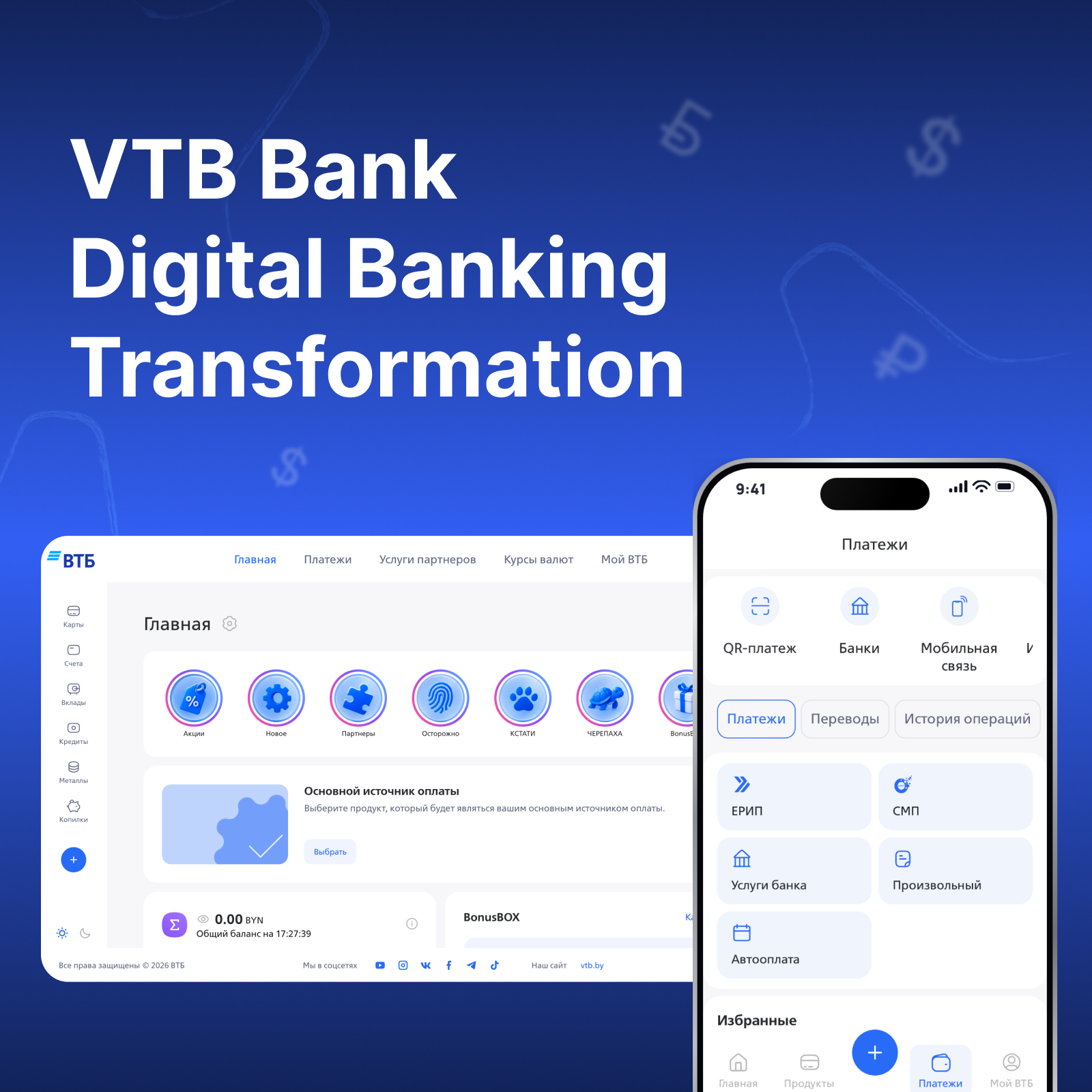
VTB is a big, long-running project that we run at Systemnye Tekhnologii as a full-cycle partner: analysis, design, development, delivery. I work on it with a design lead and two other designers. Each of us has our own tasks, but we all build one product, so everything has to fit together. The project is still going, and new requests keep coming in.
Where we started
The interfaces for individuals and businesses looked old. The bank had a mobile web version but no PWA, and with banking apps leaving the app stores, a browser alternative became a real need. On top of that, the ERIP payment catalogue was a huge tree. To find one service you went down level after level, and it was easy to lose track of where you were.
What I did
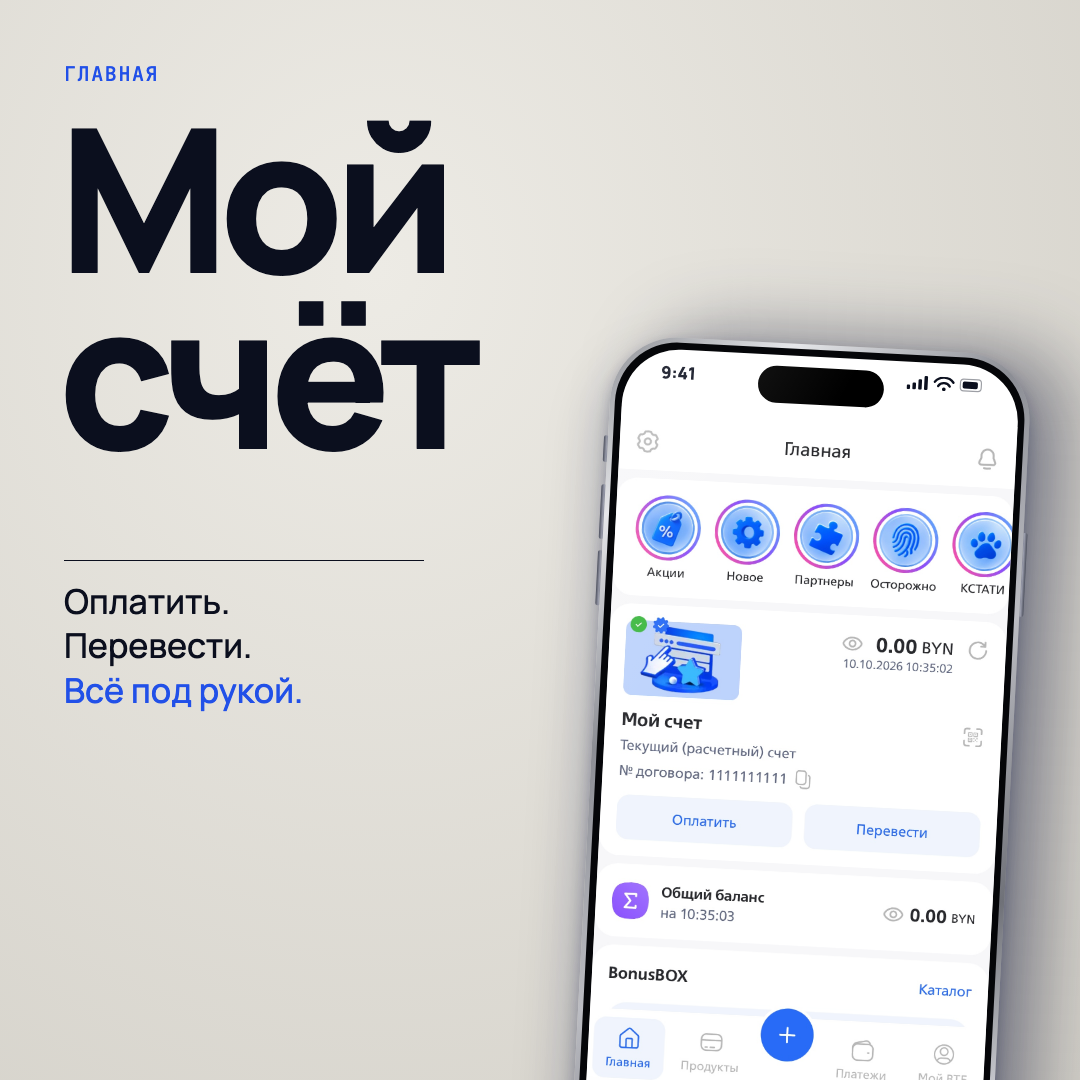
I built the design system from scratch. Alongside it I redesigned existing solutions, drew new functionality as requests arrived, moved flows from the web version to mobile, and created the PWA.
The design system
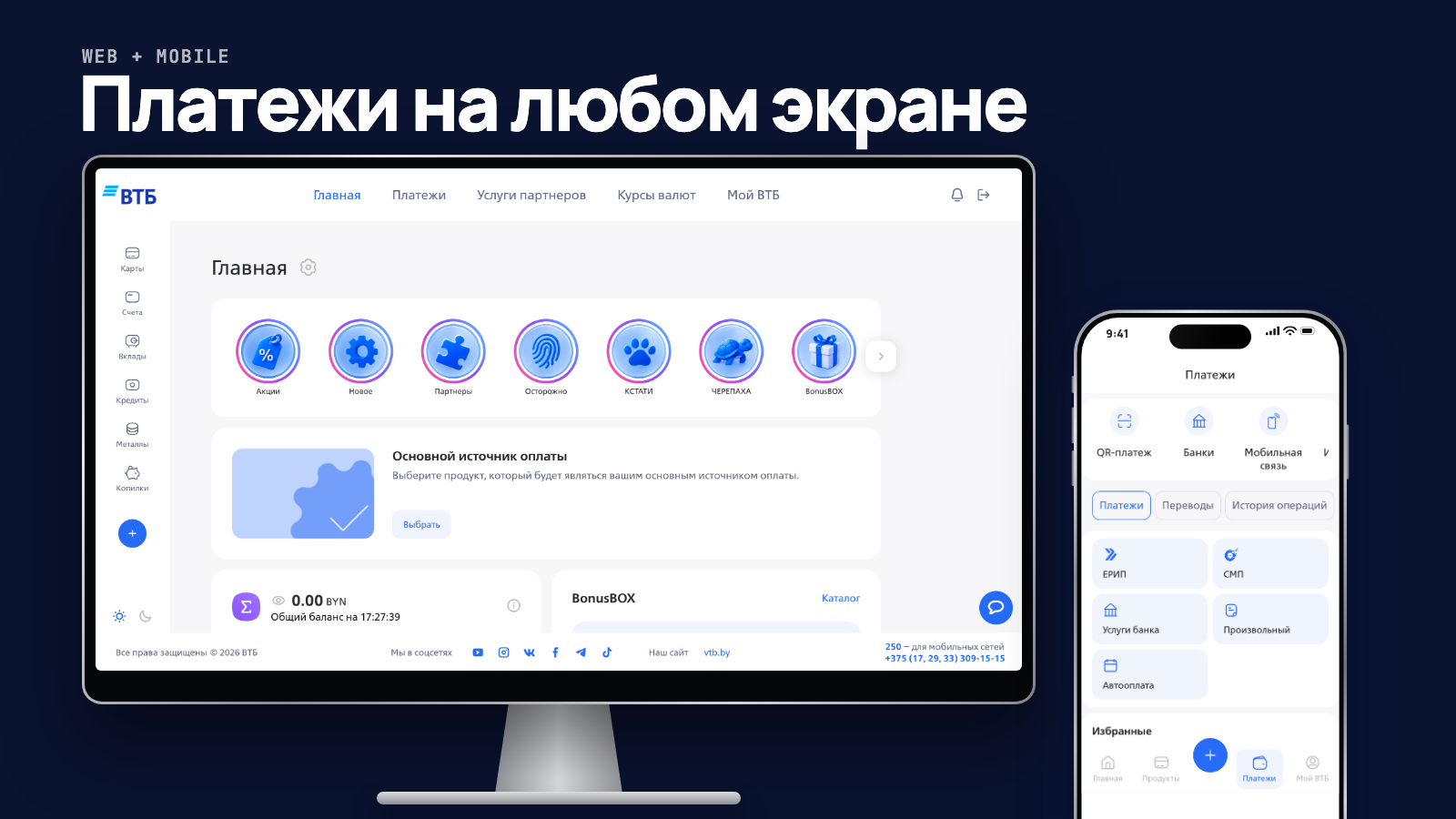
There are more than 500 components and variants in it. Web and mobile run on separate libraries, because the platforms are different, but the logic behind every component is the same. A payment works the same way in both places, even if it looks a bit different. Mobile web files turned out enormous: so many screens and states that opening them takes patience.
Cutting down the ERIP tree
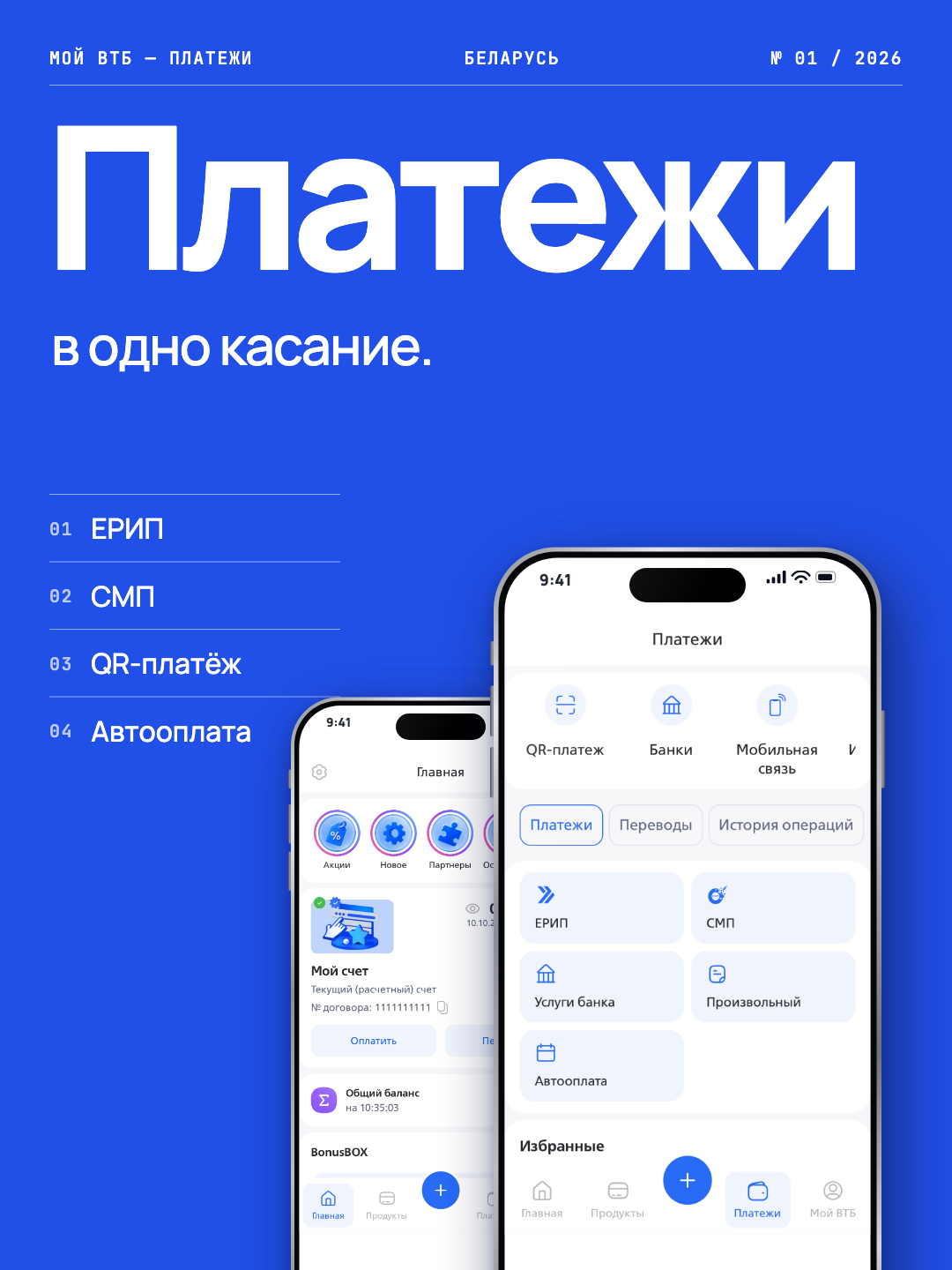
The original tree was long, and the bank wanted to keep it as it was. We shortened it. The path to a service went from roughly seven steps to three, and we added menu items that make it easier to move through the tree and act on it. The goal was simple: you always know where you are, and you get to what you need faster.
Arguing with the bank
Keeping the old structure felt safe for them. We saw it differently. A shorter path is easier for the user: clearer orientation, quicker actions. We spent a long time explaining why this also made sense for the business. In the end we shipped our version.
Mobile
For mobile web we didn’t want a squeezed copy of the desktop. The aim was the best version for a small screen: good adaptive behavior, fewer steps in the main flows.
How the work moved
Our Figma files went to business and system analysts, who agreed them with the bank. At some stages we talked to the bank directly.
Where it is now
Everything we designed has been shipped, and new requests are being built right now.